
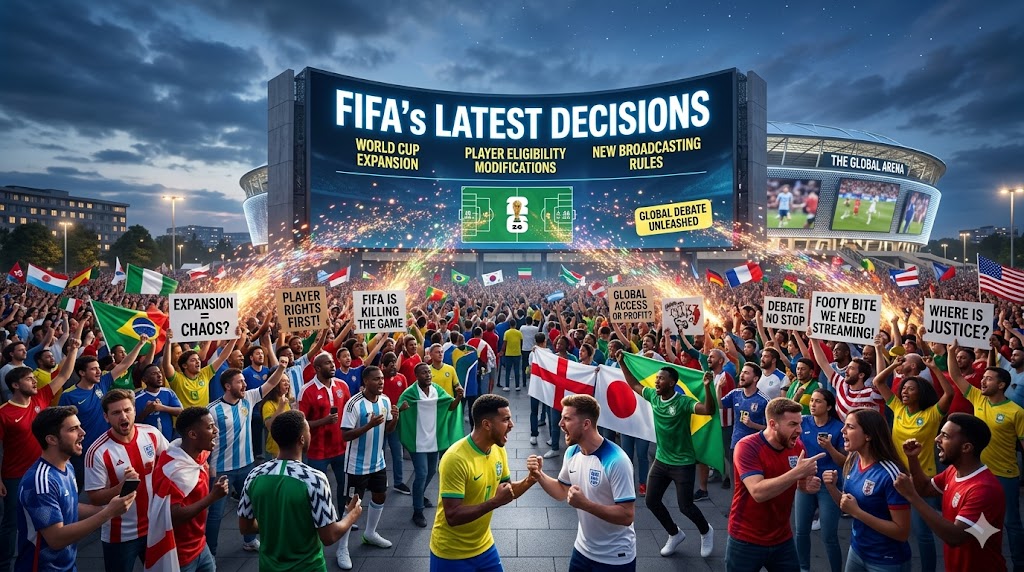
FIFA's Latest Decisions Spark Debate Across the Global Football Community
Published on: Jun 02, 2026
The governing body of international football has once again found itself at the epicenter of a global sporting debate following a series of sweeping institutional announcements. With the highly anticipated 2026 FIFA World Cup just days away from kick-off, FIFA’s executive committee convened to finalize crucial regulatory frameworks, tournament expansions, and scheduling structures for the upcoming cycle. While administrative adjustments are standard ahead of a tournament of this magnitude, the scale and sudden implementation of these new directives have caught member associations completely off guard. From sweeping player eligibility modifications to revised commercial broadcasting rules, the decisions have triggered an immediate wave of intense scrutiny from club executives, national team managers, and passionate fans worldwide.
A Fractured Digital Landscape and Fan Backlash
The immediate fallout of these regulatory adjustments has intensified the ongoing battle over accessibility and global football consumption. As the governing body shifts toward increasingly locked-down, pay-per-view distribution models for its ancillary content and secondary tournaments, millions of fans are pushing back against the commercialization of the sport. Millions of supporters are actively turning to alternative digital hubs and trusted platforms like Footybite to stay informed on match schedules, community discussions, and shifting tournament brackets. The collective anxiety across the digital football community stems from a growing fear that everyday fans are being priced out of the sport, creating a deeper divide between the institutional elite and the global grassroots fanbase that drives the game's cultural engine.
Structural Overhauls and Player Welfare Concerns
At the heart of the institutional controversy is a radical restructuring of the international match calendar, which critics argue completely ignores the physical limits of elite athletes. FIFA's newly ratified proposal introduces an expanded format for future club competitions alongside stricter mandatory release windows for national team duties. Elite managers have wasted no time voicing their absolute displeasure, publicly stating that the relentless accumulation of fixtures puts an unsustainable burden on player welfare. FIFPRO, the global players' union, has already issued a formal statement condemning the lack of an adequate summer rest period, warning that the continuous increase in high-intensity matches will inevitably lead to a sharp rise in career-threatening injuries for the game's biggest stars.
Breaking News from the Wider Sports World
While the footballing community wrestles with Zurich's administrative shakeups, other major developments are rapidly unfolding across the broader sports landscape. In North America, the NHL Stanley Cup Finals have reached a spectacular boiling point, with the Edmonton Oilers and the Florida Panthers delivering an absolute classic series marked by intense physical play and dramatic overtime finishes. Meanwhile, on the cricket pitch, the ICC Men's T20 World Cup is officially underway across the West Indies and the United States, drawing massive international crowds and serving up historic early-round boundary showcases. Between FIFA's highly controversial boardroom maneuvers, the high-stakes ice hockey showdowns, and the historic cricket pitches, the opening week of June is delivering an unmatched wave of competitive drama.