
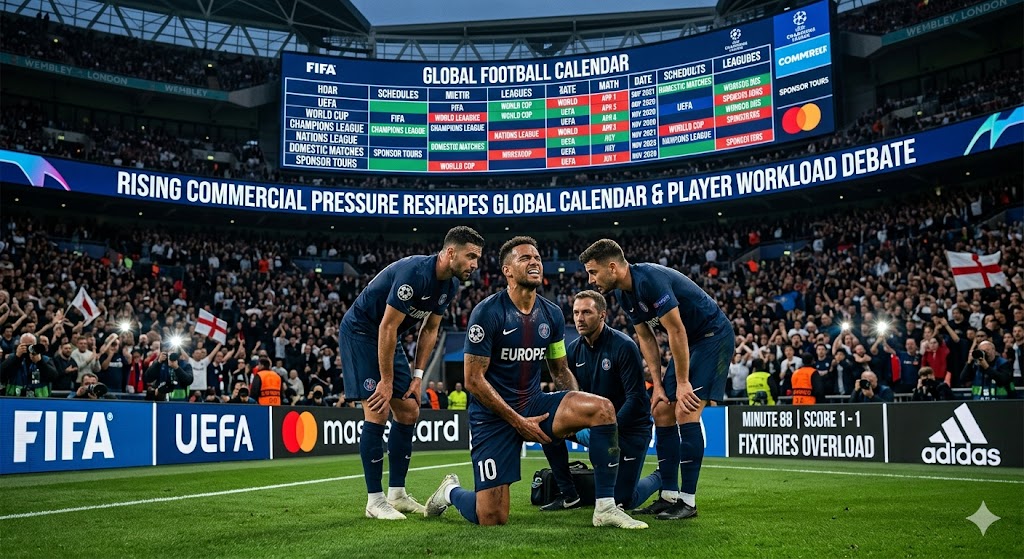
The Breaking Point: How Commercial Pressure is Forcing a Football Calendar Revolution
Published on: May 19, 2026
The beautiful game is stretching its most valuable assets to the absolute limit as elite clubs and governing bodies chase unprecedented television and sponsorship revenue. The global football calendar has transformed into an relentless, year-round gauntlet that leaves players with virtually no time to rest or recover between grueling campaigns. This rapid expansion has pushed the ongoing player workload debate from a minor managerial complaint into a full-blown existential crisis for the sport, threatening the long-term health of the athletes and the quality of the game itself. With the introduction of expanded tournament formats, pre-season international tours, and newly created continental competitions, elite footballers are now routinely asked to play upwards of 60 to 70 matches per season. The traditional summer break has effectively vanished, replaced by lucrative exhibition matches spanning multiple continents, leaving managers across Europe’s top leagues increasingly vocal as they warn that the current trajectory is unsustainable and directly leads to an inflation of severe, fatigue-induced injuries.
The Financial Engine Driving the Global Calendar Expansion
The mathematics behind the scheduling crunch are incredibly simple, as more matches equal more broadcast inventory, higher ticket sales, and greater leverage with global sponsors. For top-tier clubs balancing massive wage bills and striving to remain competitive on the world stage, these commercial avenues are no longer optional—they are vital for financial survival under modern financial sustainability regulations. As a result, fans are constantly looking for alternative ways to keep up with this massive influx of matches, often turning to digital hubs like Footybite to navigate broadcast schedules, check streaming options, and find live updates for an overcrowded fixture list. This surge in digital viewership numbers only reinforces the corporate belief that the market for top-level football is far from saturated, further incentivizing the creation of even more mid-week and off-season tournaments that pack the calendar to its absolute maximum capacity.
The High Stakes of Player Burnout and Impending Backlash
The human cost of this commercial drive is becoming impossible to ignore as elite players face unprecedented physical and psychological demands. Advanced sports science data now shows a sharp rise in soft-tissue injuries, career-threatening ligament tears, and mental burnout among athletes who are rarely given a chance to fully decompress. FIFPRO, the global players' union, has repeatedly called for mandated break periods and strict caps on consecutive back-to-back match appearances, suggesting that the quality of the product on the pitch will inevitably suffer if athletes are permanently exhausted. Despite these warnings, the football machine keeps rolling forward, creating a palpable sense of friction between the players who perform on the pitch and the executives who manage the sport from boardroom offices.
Latest Sports News: May 2026 Continental Updates and Tour Rumors
The tension surrounding player fatigue has reached a critical peak this month as domestic campaigns draw to a close and international duties loom on the horizon. As preparations heat up ahead of the crucial final European club fixtures, several high-profile managers have used their pre-match press conferences to lambast the upcoming summer schedule, calling it an exploitation of player health for corporate greed. Rumors are also circulating heavily through major sports media outlets that multiple player syndicates are quietly discussing the possibility of a coordinated boycott of post-season promotional tours, marking a potential turning point where player power might finally unite to combat corporate scheduling.
Finding a Sustainable Path Forward for Modern Football
Resolving the calendar crisis requires a delicate balancing act that the sport's governing bodies have so far failed to achieve. Stakeholders must find a way to satisfy the commercial appetites of clubs and sponsors without treating the players as expendable, infinite commodities. Ideas such as shrinking domestic leagues, eliminating secondary cup competitions, or introducing strict squad-rotation mandates have been proposed across various football forums, but none have gained universal consensus due to the immediate financial losses they would incur for smaller clubs. Ultimately, football is reaching a dangerous crossroads where the financial drive to reshape the calendar risks diluting its own brilliance, leaving fans who rely on platforms like Footybite to witness peak athletic performance watching depleted squads and a watered-down version of the game.